
Cell layout that supports production
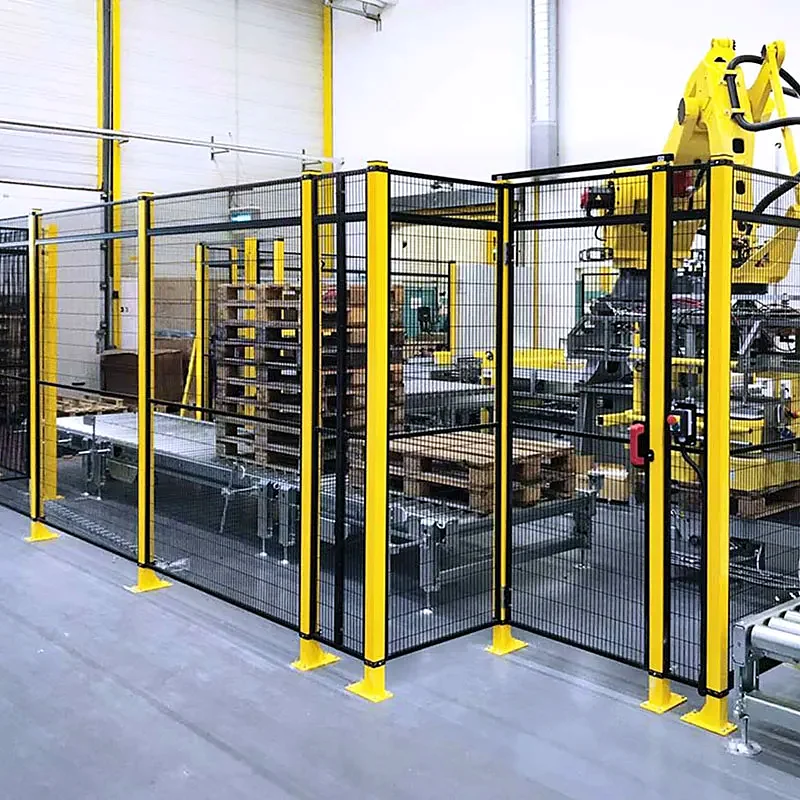
Guard lines, gates and transfer points are planned around operator routes, material flow, floor space and maintenance access.
Robotics & automation
Machine-specific perimeter guarding and controlled access for industrial robots, palletisers and automated cells—from survey and layout review to installation and handover.
 BMG / SOL
Direct answer
Robot cell guarding is a physical and functional safeguarding system that separates people from hazardous robot movement. A project can combine perimeter panels, controlled gates, product-transfer openings, interlocks, guard locking and presence sensing according to the risk assessment and access tasks.
The final safeguard must follow the machine-specific risk assessment, intended use and agreed modification scope.
Project outcomes
Physical construction, access and safety interfaces are developed together so the guard does not create avoidable operating or maintenance problems.
Guard lines, gates and transfer points are planned around operator routes, material flow, floor space and maintenance access.
Fixed panels, monitored doors, guard locking and reset locations are selected around foreseeable entry and stopping behaviour.
Frames, infill, doors, interlocks and protective-device interfaces are developed as one coordinated guarding scope.
Design brief
These questions turn a broad guarding request into a machine-specific scope that can be reviewed, manufactured and installed.
Typical applications
Frequently asked
Concise project guidance for specifiers, engineers and dutyholders. The actual machine review determines the final approach.
Ask the engineering teamThe distance depends on the robot and tooling envelope, possible ejection, opening size, guard height, stopping performance and the applicable safety-distance assessment. It should be determined for the actual cell rather than taken from a generic layout.
Where opening a gate could expose a person to hazardous movement, monitored interlocking is commonly required. Guard locking may also be needed when the hazard cannot stop before access is possible.
Yes, but transfer openings must be assessed so they do not create an access route to the hazard. The solution may use restricted apertures, tunnels, distance, flaps, muting or other project-specific measures.
Yes. Retrofit work begins with the actual layout, operating modes, access tasks, stopping behaviour and control interfaces before the guard line and modification scope are agreed.
Start with the machine and the task
Send photographs, dimensions or a short description. We will help define the survey, design and installation scope.